


How to Get Your Finances Organised from Scratch
August 13, 2026 | by imparsolucoes2002@gmail.com
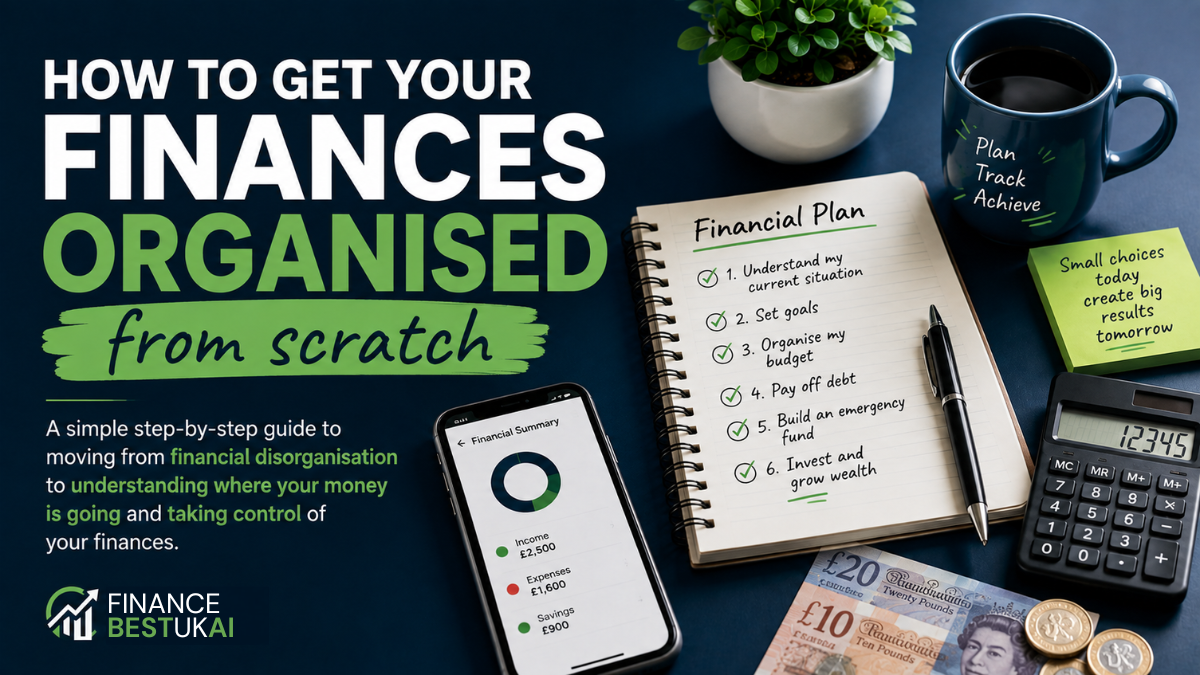
A simple step-by-step guide to moving from financial disorganisation to understanding where your money is going and taking control of your finances.
Organising your finances can seem complicated when you have overdue bills, expenses that seem to get out of control, debts, credit cards and the feeling that there is never enough money left at the end of the month.
But getting your finances in order does not require you to start by earning more money. The first step is to understand your current situation, create a plan and establish financial habits that can be maintained over the long term.
If you want to learn how to organise your finances from scratch, this guide provides a practical path to get started today — even if your current financial situation is far from ideal.

Why Is It So Important to Organise Your Finances?
Financial disorganisation can create a difficult cycle to break.
Without knowing exactly how much money comes in and how much goes out, it becomes harder to control your spending. As expenses increase, you may rely more heavily on credit. Debts grow, interest consumes part of your income, and there is less and less money available to build savings or invest.
Organising your finances means breaking this cycle.
More than simply controlling expenses, financial education means learning how to make better decisions with your money. The goal is not to stop spending, but to ensure that your resources are aligned with what genuinely matters to you.
An organised financial life should allow you to:
- know how much you earn and spend;
- control your expenses;
- reduce or eliminate debts;
- build an emergency fund;
- set financial goals;
- start investing;
- increase your wealth over time.
And it all starts with a financial assessment.
1. Find Out Exactly Where You Stand Financially
Before thinking about investments, cutting costs or finding additional income, carry out a complete review of your current financial situation.
Write down all your sources of income and all your expenses.
Include your salary, self-employed income, benefits, investment income and other regular sources of money. Then record rent, mortgage payments, food, transport, household bills, education, insurance, subscriptions, leisure, purchases and other expenses.
Don’t rely on estimates. Whenever possible, use bank statements, credit card statements and receipts to identify the actual amounts.
The aim of this first step is to answer three questions:
How much money comes in? How much goes out? Where is it going?
This assessment can reveal something important: often, the problem isn’t one large expense, but the combination of many small expenses that occur throughout the month.
An Important Rule: Don’t Be Afraid of the Numbers
It is common to avoid looking at your bank account when your financial situation isn’t good. However, ignoring the numbers doesn’t solve the problem.
Knowing your financial reality, even when it is difficult, is the first step towards changing it.
2. Categorise Your Spending
Once you have listed your expenses, organise them into categories.
A simple approach could be:
Essential expenses: housing, food, energy, water, transport, healthcare and other basic necessities.
Important expenses: education, insurance, maintenance, certain subscriptions and other expenses that contribute to your quality of life or financial security.
Non-essential expenses: leisure, shopping, eating out, entertainment and other expenses that can be reduced or postponed.
This classification helps you identify where there may be opportunities to save money.
The goal is not to cut out everything that brings enjoyment. A sustainable financial strategy must also take quality of life into account.
The most useful question isn’t simply “How can I spend less?”, but:
“Am I using my money in the way I genuinely want to?”
This change in perspective turns a budget from a tool of restriction into a tool for planning.
3. Create a Realistic Budget
Now that you know your income and expenses, it’s time to create a budget.
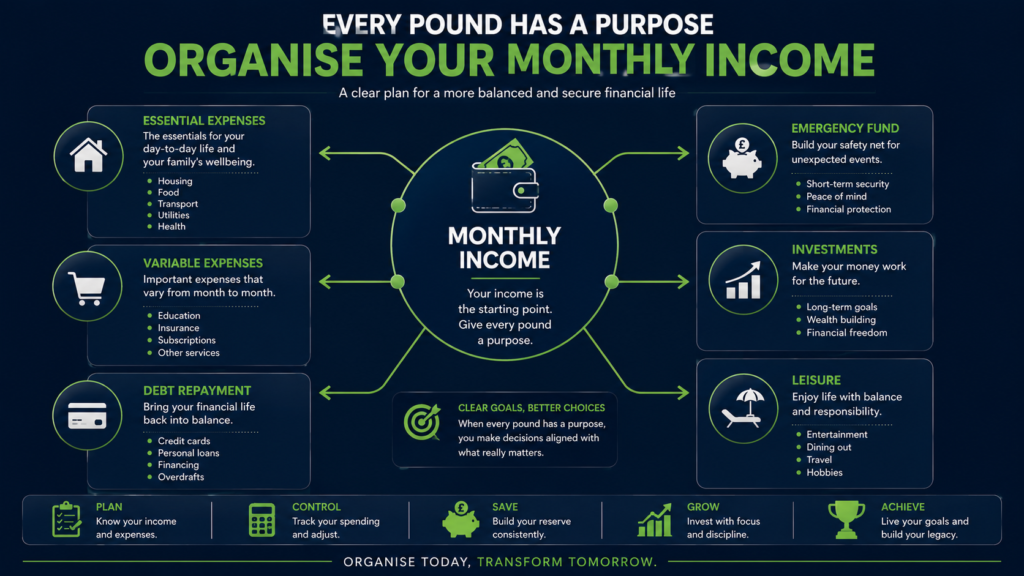
A financial budget is a plan that shows how your income will be allocated between essentials, goals, leisure, debt repayments, savings and investments.
There is no universal percentage that works perfectly for everyone. The cost of living, income, family size, debts and goals vary from person to person.
So avoid blindly copying a rule you found online.
Start with a simple structure:
Net income → essential expenses → variable expenses → debts → emergency fund → investments → leisure.
If the result is negative, you need to act quickly: reduce expenses, renegotiate debts, increase your income, or combine several of these strategies.
If you have money left over, don’t simply allow it to disappear throughout the month. Give it a purpose.
That’s what turns available money into financial planning.
4. Cut Expenses Without Destroying Your Quality of Life
Reducing expenses doesn’t mean living an extremely restrictive lifestyle.
Start by identifying expenses that provide little value compared with what they cost.
Examples include:
- subscriptions you rarely use;
- unnecessary fees and services;
- impulse purchases;
- eating out too frequently;
- unplanned instalment purchases;
- interest and late-payment charges;
- services that could be renegotiated.
A simple technique is to review your recurring expenses at least once a month.
You can also use the 24-hour rule: before making an unplanned purchase, wait a day. In many cases, the desire will fade and you may realise that you didn’t really need the item.
The goal is to create awareness before spending.
5. Organise and Prioritise Your Debts
If you have debts, they deserve special attention.
Create a list containing:
- creditor;
- total amount owed;
- monthly payment;
- interest rate;
- number of remaining instalments;
- current status of the debt.
Then identify which debts have the highest interest rates.
Credit cards and other forms of high-cost borrowing can quickly undermine a household’s ability to save. Therefore, it will often make sense to prioritise paying down the most expensive debts.
It may also be worth negotiating with creditors, comparing alternatives and seeking terms that reduce the overall cost of the debt.
But be careful: replacing one debt with another only makes sense if the new arrangement genuinely improves your financial situation.
The objective isn’t simply to reduce the monthly payment. It is to reduce the financial cost and regain room in your budget.
6. Build an Emergency Fund
Once you have organised your budget and begun dealing with your debts, one of your next priorities should be building an emergency fund.
An emergency fund exists to cover unexpected situations such as loss of income, medical expenses, urgent repairs or other events that were not included in your budget.
The amount you need depends on the stability of your income and your individual or household circumstances. Someone with a predictable income may have different needs from someone who is self-employed, for example.
More important than trying to reach a large amount immediately is simply getting started.
Set an initial target and gradually increase the amount you have saved.
Your emergency fund should also be kept in a low-risk, appropriately liquid financial product so that you can access the money when necessary.
It is not designed to achieve the highest possible return.
The purpose of an emergency fund is financial security.
7. Set Financial Goals
Saving money without knowing why can be difficult.
Instead, turn your wishes into specific financial goals.
Rather than saying:
“I want to save money.”
Define it more precisely:
“I want to build £10,000 in savings by December 2027 to establish my emergency fund.”
A good financial goal should have a value, a deadline and a purpose.
You can have short-, medium- and long-term goals, such as:
- paying off debts;
- building an emergency fund;
- taking a holiday;
- buying a property;
- funding education;
- starting a business;
- preparing for retirement;
- building wealth.
When you have a clear purpose, it becomes easier to decide whether a particular purchase deserves to consume money that could otherwise be directed towards that goal.
8. Learn to Distinguish Between Wants, Needs and Priorities
One of the most important financial skills is understanding that being able to afford something doesn’t necessarily mean you should buy it.
Before making a purchase, ask yourself:
- Do I really need this?
- Have I set aside money for this purpose?
- Was this purchase included in my budget?
- Am I buying it because I need it or because of an impulse?
- Will this expense interfere with one of my financial goals?
These questions aren’t designed to stop you from spending.
They are designed to ensure that you are responsible for the decision — rather than the impulse, advertising or easy access to credit.
9. Start Investing Once Your Financial Foundation Is in Place
Investing is an important tool for building wealth, but it should not be used as a solution to a disorganised financial life.
Before looking for more sophisticated investments, focus on building a solid foundation.
That means:
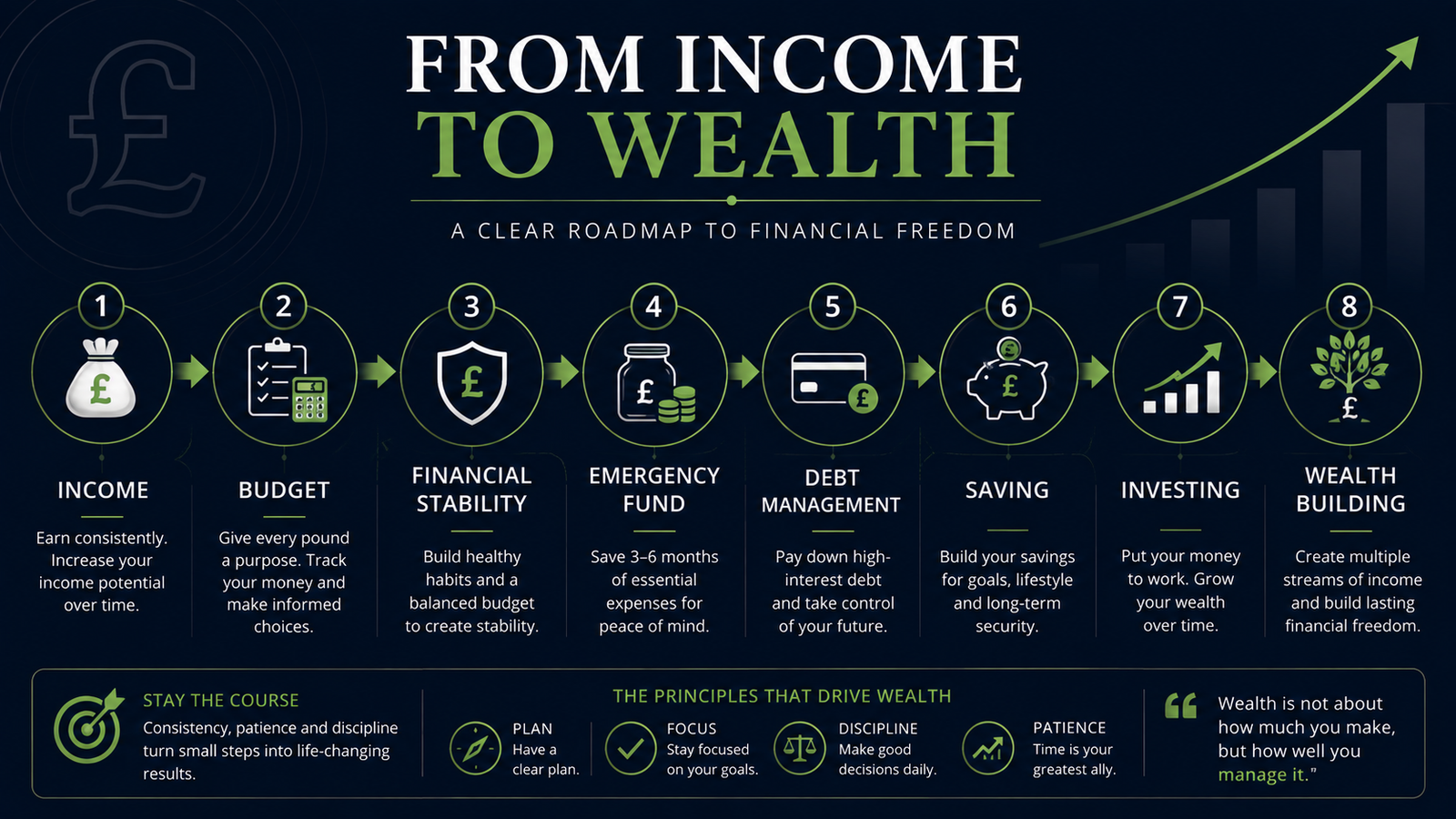
organise your budget → deal with expensive debt → build an emergency fund → define your goals → invest according to those goals.
Once that foundation is in place, you can study different investment options while considering factors such as risk, return, liquidity, time horizon and taxation.
There is no single perfect investment for everyone.
The right investment depends on the investor’s objectives and circumstances.
10. Turn Financial Organisation into a Habit
Organising your finances once isn’t enough.
Life changes. Income changes. Expenses change. Goals change.
That’s why you should establish a regular financial routine.
Once a week, review your spending.
Once a month, carry out a complete review of your budget.
Every few months, reassess your goals, debts, emergency fund and investments.
This doesn’t need to take hours. What matters is consistency.
Financial organisation works best when it stops being an occasional task and becomes part of your routine.
A Simple Method to Start Today
If you’re completely lost and don’t know where to begin, follow this sequence:
Day 1: find out how much money comes in each month.
Day 2: list all your expenses.
Day 3: categorise your spending.
Day 4: list all your debts.
Day 5: identify expenses that can be reduced or eliminated.
Day 6: create your first budget.
Day 7: set a financial goal for the coming months.
After that, start building your emergency fund and gradually move towards investing.
Don’t wait until you can do everything perfectly.
The initial goal isn’t to have a perfect financial life. It is to have a better financial life than you had yesterday.
How Much Money Should I Save Each Month?
There is no single percentage that works for everyone.
If you are heavily indebted, you may need to focus your available resources on paying off those debts. If you already have a substantial emergency fund, you may be able to direct a larger proportion of your income towards investments.
The most important thing is to establish a contribution that is realistic for your circumstances and make it consistent.
Even a seemingly small amount can make a significant difference when maintained over many years.
The combination of discipline and compound interest can transform regular contributions into substantial wealth over the long term.
How Can You Maintain Financial Control Over the Long Term?
Once you have organised your finances, avoid falling back into old habits.
A few simple practices can help:
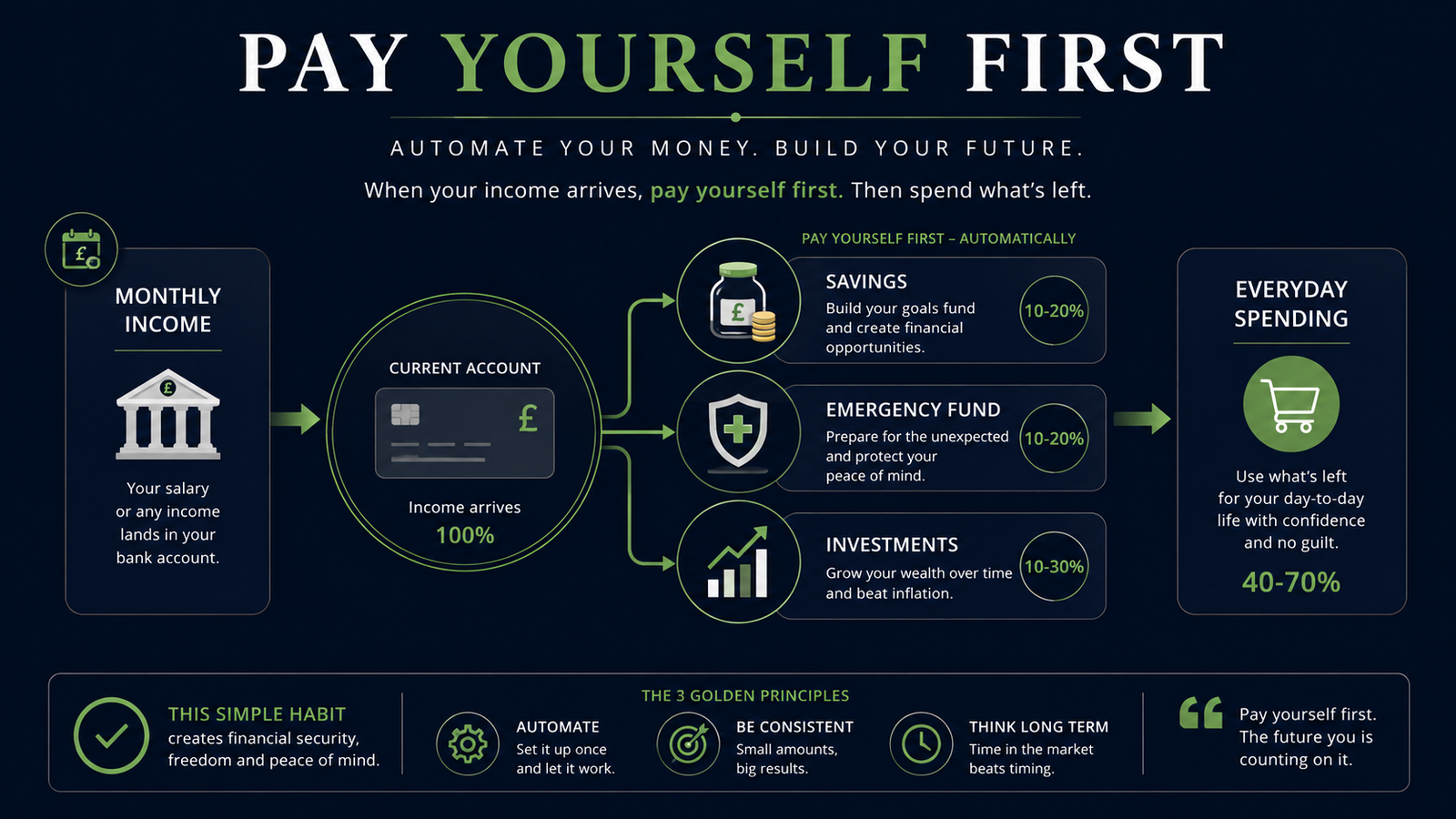
Automate what you can. Schedule transfers to your savings or investments shortly after receiving your income.
Monitor your budget. Don’t wait until the end of the month to discover that you’ve spent more than planned.
Avoid relying on credit. Credit cards can be useful tools, but they shouldn’t be treated as an extension of your income.
Review your contracts. Insurance, subscriptions, fees and other recurring services can represent significant expenses over several years.
Increase your earning potential. Cutting expenses has limits. Developing new skills, pursuing professional opportunities or creating additional income streams can accelerate wealth creation.
Invest in knowledge. The more you understand about money, the less dependent you become on impulsive decisions or promises of quick wealth.
Financial Organisation Is About Building Freedom
True financial organisation isn’t simply about spending less.
It means having clarity about your money and the ability to decide what to do with it.
When you know how much you earn, control your spending, manage your debts, have an emergency fund and invest according to your goals, you begin building something greater than an organised bank account: you begin building financial freedom.
And you don’t have to wait for your next pay cheque, the next year or a major change in your life.
Start with the numbers you have today, make one small adjustment and move forward one step at a time.
Building wealth is the result of decisions repeated consistently over time.
Conclusion
Learning how to organise your finances from scratch may seem difficult at first, but the process can be broken down into simple steps.
First, understand your financial situation. Then organise your expenses, create a budget, manage your debts, build an emergency fund, set financial goals and finally start investing consciously.
The most important thing is to start.
Your financial future is built through the decisions you make with your money today.
RELATED POSTS
View all


Brazilian Government Bonds: A Guide for UK Investors
August 15, 2026 | by imparsolucoes2002@gmail.com
Budgeting: The Tool That Can Change Your Relationship with Money
August 15, 2026 | by imparsolucoes2002@gmail.com
Money: How to Get More from What You Already Earn
August 15, 2026 | by imparsolucoes2002@gmail.com