


Money: How to Get More from What You Already Earn
August 15, 2026 | by imparsolucoes2002@gmail.com
You don’t necessarily need to earn more to improve your financial life. Often, the first step is learning how to make better use of the money that already comes in every month.
When we talk about financial prosperity, it’s common to immediately think about increasing your salary, getting a promotion or finding a second source of income.
Increasing your income can, of course, accelerate wealth building. But there is another factor that is often overlooked: how much of your income is actually working in your favour?
Two people can earn exactly the same amount and end up in completely different financial situations.
One may spend everything, accumulate debt and rely on credit. The other may control their costs, build an emergency fund, avoid unnecessary interest and invest regularly.
The difference isn’t only how much they earn.
It’s how they use their money.
The Problem Isn’t Just How Much You Earn
Imagine your income increases by 10%, but your expenses increase by the same amount.
In the end, you earn more but still have no ability to save.
This phenomenon is known as lifestyle inflation: as income increases, some people also increase their standard of living and spending.
A higher salary may mean a larger home, a more expensive car, more meals out, more holidays, more subscriptions and more shopping.
None of this is necessarily wrong.
The problem arises when every increase in income is immediately converted into an increase in spending.
If this continues, you can earn more and more without building wealth.
That’s why one of the most important questions in financial education is:
How can I turn a larger proportion of my income into security, freedom and wealth?
1. Find Out How Much Your Life Really Costs
Before trying to do more with your money, find out how much it actually costs to maintain your current lifestyle.
List your monthly expenses and separate them into:
- essential expenses;
- variable expenses;
- discretionary expenses;
- debts;
- savings;
- investments.
This gives you a crucial piece of information:
How much of your income is already committed before the month even begins?
Recurring expenses deserve particular attention because they can remain in your budget for years.
A small monthly subscription may seem insignificant on its own. But several small recurring expenses can add up to a significant amount over the course of a year.
So don’t only look at the monthly cost.
Ask yourself:
How much does this decision cost me over a year?
This simple change in perspective can make your spending much more visible.
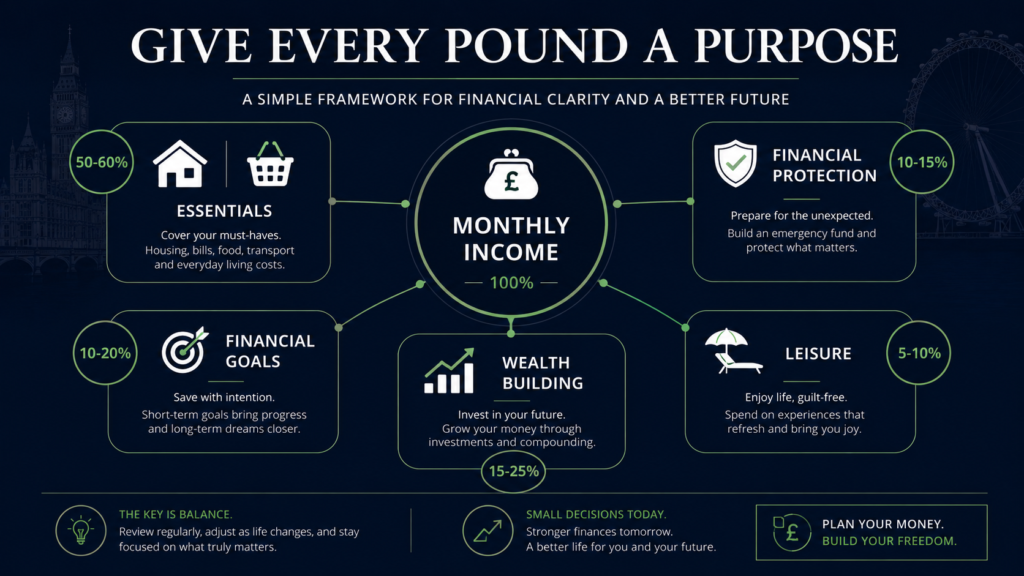
2. Give Every Pound a Purpose
One of the most effective ways to improve how you use your money is to give every part of your income a purpose.
This doesn’t mean obsessively tracking every penny.
It means preventing your available money from being spent automatically without contributing to your goals.
A simple structure could include:
Needs → protection → goals → growth → leisure.
Needs keep your life running.
Protection helps you deal with unexpected events.
Goals direct money towards specific plans.
Growth involves investments and wealth building.
And leisure allows you to enjoy your money without guilt, provided it fits within your plan.
When every part of your income has a purpose, making decisions becomes easier.
3. Stop Losing Money to Unnecessary Interest
One of the fastest ways to get more from the money you already earn is to stop paying interest that could have been avoided.
When you have high-interest debt, part of your future income is already committed.
You are working today to pay for financial decisions made yesterday.
That’s why eliminating expensive debt can have a greater impact than immediately searching for an investment offering a slightly higher return.
Make a list of your debts and identify:
- outstanding balance;
- interest rate;
- monthly payment;
- remaining term;
- total cost.
Then prioritise the most expensive debts.
It may also be worth negotiating with creditors to reduce the overall cost.
But be careful of a common trap: a lower monthly payment does not necessarily mean a cheaper debt.
Whenever possible, compare the total cost.
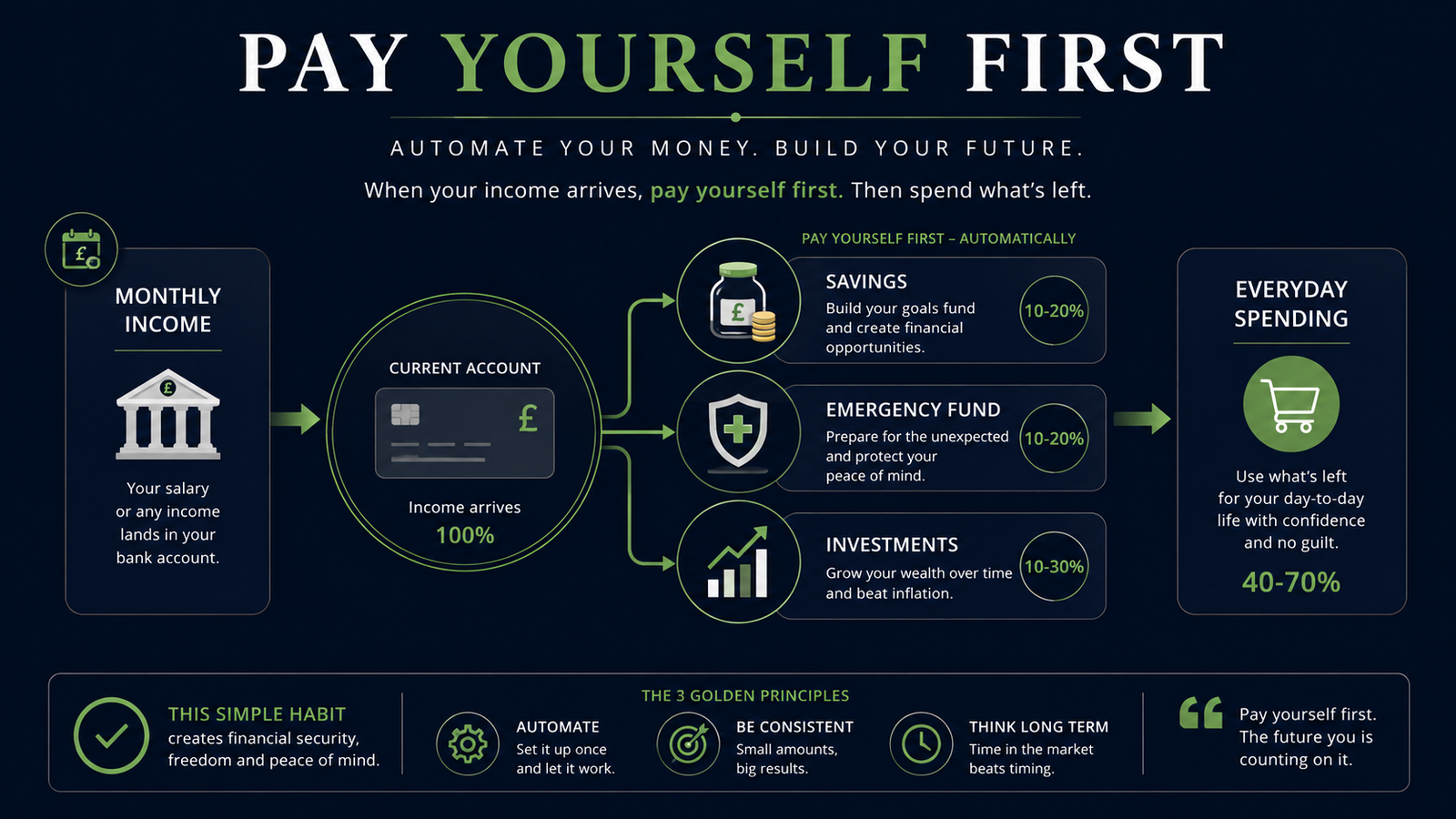
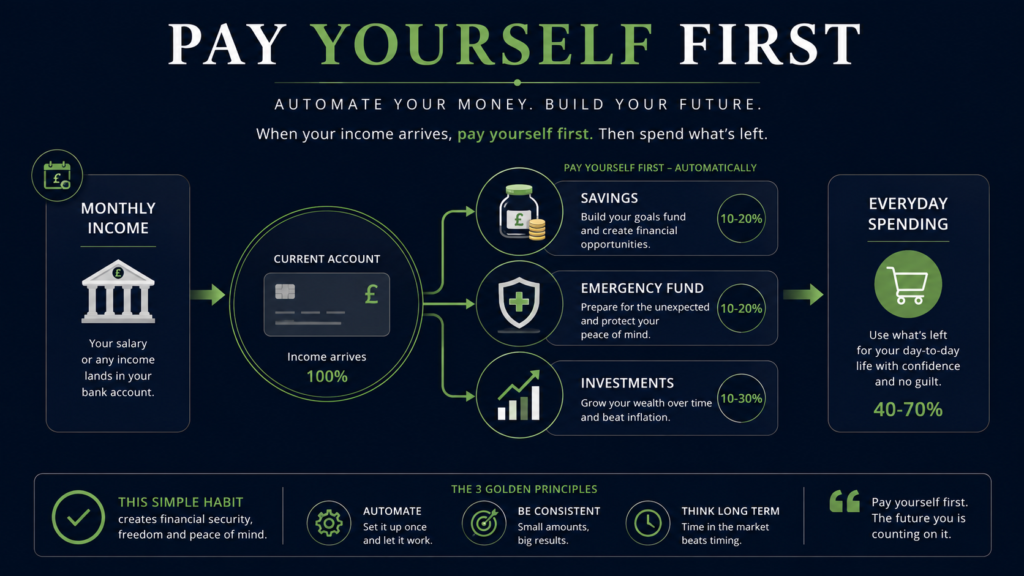
4. Turn Saving into an Automatic Process
Many people try to save whatever is left at the end of the month.
The problem is that, most of the time, there is little — or nothing — left.
An alternative is to reverse the process:
receive → set aside → spend the rest.
By automatically transferring money to a savings or investment account shortly after receiving your income, you reduce the chance of spending it impulsively.
The initial amount doesn’t need to be large.
What matters most is consistency.
As your financial situation improves, you can gradually increase the amount.
This principle is particularly powerful because it turns wealth building into an automatic behaviour rather than something that depends on willpower every month.
5. Make Your Money Work for You Once Your Financial Foundation Is Strong
Saving money is important, but money held in cash can lose purchasing power over time because of inflation.
Once you have established an appropriate emergency fund and organised your debts, you can start learning about investments.
The goal shouldn’t simply be to find the investment with the highest possible return.
An investment should be assessed based on factors such as:
- risk;
- potential return;
- liquidity;
- time horizon;
- diversification;
- tax considerations;
- financial objective.
The right investment for an emergency fund may be completely different from the one used for a long-term goal.
That’s why there is no universally best investment.
There is an investment that may be more appropriate for a particular objective, timeframe and risk tolerance.
6. Grow Your Money Before Increasing Your Lifestyle
When your income increases, you have a powerful opportunity.
You can use the entire increase to consume more.
Or you can divide that increase between quality of life and wealth building.
For example, if you receive a pay rise, you don’t necessarily have to turn the entire increase into new expenses.
Part of it can improve your quality of life.
Another part can increase your savings.
Another can accelerate debt repayment.
Another can be directed towards investments.
The important thing is to avoid allowing 100% of your income growth to be absorbed by lifestyle inflation.
This is how increases in income can start producing wealth.
7. Be Careful with Small Expenses That Become Big
The problem isn’t necessarily the occasional £5 coffee.
The problem can be the automatic repetition of dozens of small decisions without any planning.
A £5 purchase may seem insignificant.
But £5 a day amounts to approximately £1,825 over a year.
This doesn’t mean you should eliminate every small pleasure.
It means you should understand the cumulative cost of your habits.
Before cutting something you genuinely value, look first for expenses that don’t provide enough value in return for the money they consume.
Saving money shouldn’t mean living a worse life.
It should mean spending more intentionally.
8. Increase the Value of Your Time
There is a limit to how much you can save.
You can cancel subscriptions, reduce waste and renegotiate services, but you cannot reduce your expenses indefinitely.
Your income, on the other hand, may have greater potential for growth.
Investing in knowledge, professional skills and new opportunities can increase your ability to generate income in the future.
This could include:
- developing skills that are valued by the market;
- looking for new professional opportunities;
- negotiating your salary;
- creating a side income;
- developing a business;
- turning knowledge into services or products.
The central idea is simple:
reducing waste protects your money; increasing your ability to earn expands your possibilities.
Both strategies work best together.
9. Use Time as an Ally
Getting more from your money isn’t just about finding better opportunities today.
It’s also about allowing good financial decisions time to produce results.
When you save and invest regularly over many years, you can benefit from the effect of compound interest.
Returns can remain invested and subsequently generate further returns.
This is one reason why starting early can be so important.
You don’t need to wait until you have a large amount of money before you begin building wealth.
Consistency and time can be more important than trying to find the perfect opportunity.
10. Don’t Confuse a Low Price with Good Value
One of the most useful ways to get more from your money is to learn to think about value, not just price.
The cheapest product isn’t always the best choice.
A higher-quality product that lasts for many years may cost less in the long run than repeatedly replacing a cheaper product.
Similarly, paying for education, professional tools or services that save you time can represent a cost today and a financial advantage tomorrow.
The question shouldn’t only be:
“How much does it cost?”
It should also be:
“What am I getting in return for this money?”
A Simple Formula for Getting More from Your Money
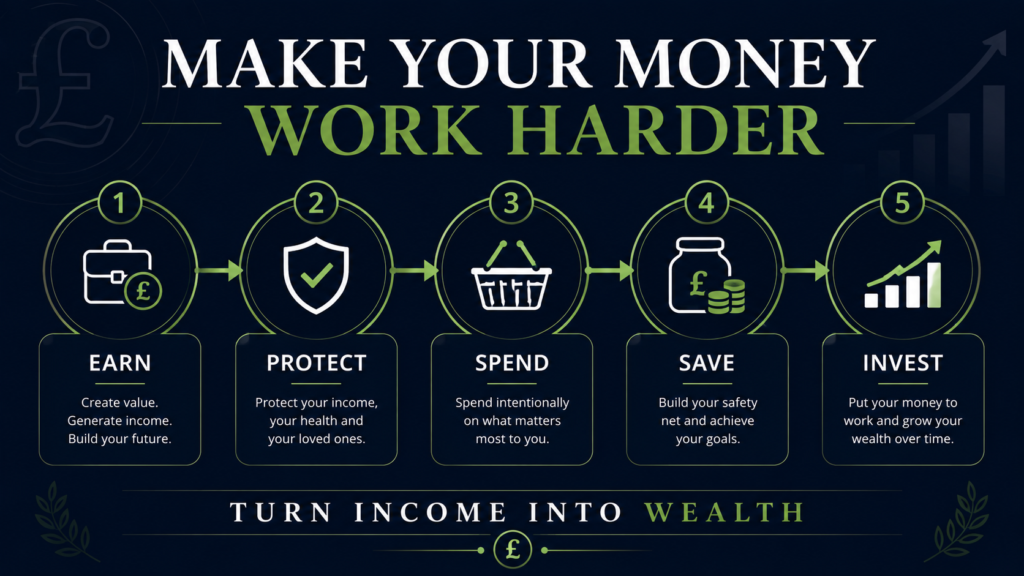
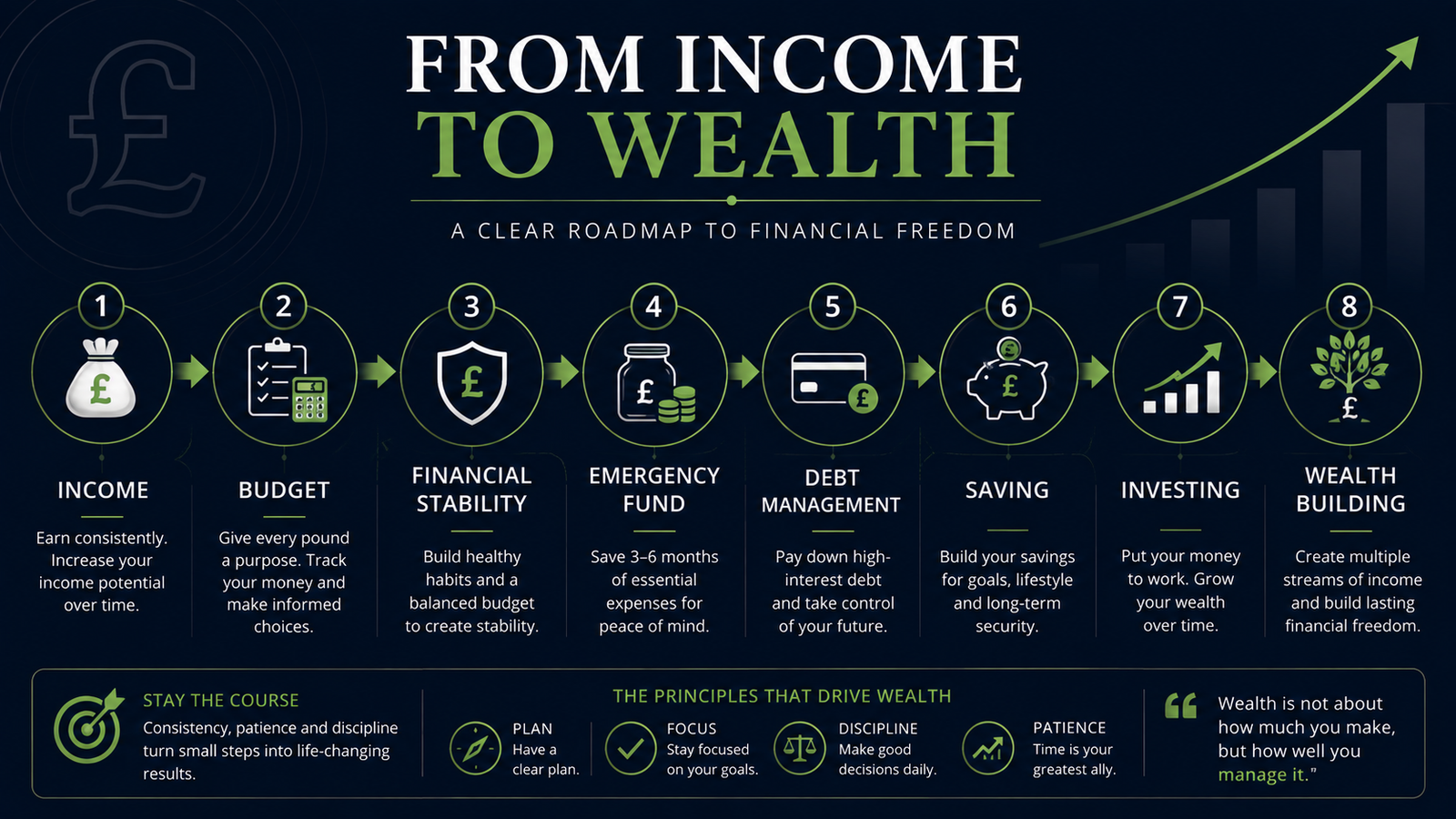
You can summarise much of this process in five steps:
1. Earn — increase your ability to generate income.
2. Protect — build financial security and avoid unnecessary risks.
3. Spend — use your money consciously.
4. Save — set aside part of your income for future goals.
5. Invest — put some of your capital to work according to your objectives and risk tolerance.
The mistake is to focus all your attention only on the first step.
Earning more is important.
But retaining, protecting and growing part of that income is what allows you to turn earnings into wealth.
The Real Goal Isn’t to Spend Less
It’s easy to turn financial education into an endless list of things you can’t buy.
That approach rarely works in the long term.
A healthy financial strategy shouldn’t only ask:
“What can I cut?”
It should ask:
“What really matters to me, and how can I direct my money towards it?”
If a particular expense significantly improves your life and fits within your budget, it may make sense.
If another expense regularly consumes money without providing meaningful value, it may be time to reconsider it.
The goal is to increase the financial efficiency of your life.
Money Is a Tool, Not the Final Goal
Ultimately, getting more from the money you already earn doesn’t mean turning every pound into an investment.
Money can also buy time, security, experiences, education, opportunities and freedom of choice.
True financial prosperity happens when you can use your resources consciously to build the life you want.
That requires balance.
Earn more. Spend better. Avoid waste. Protect what you’ve built. Invest consciously.
When these behaviours work together, your income starts doing much more for you.
Conclusion
You don’t have to wait for a much higher salary to start improving your financial life.
Start by understanding where your money is going.
Eliminate waste.
Manage expensive debt.
Automate your savings.
Build an emergency fund.
Invest according to your goals.
And, at the same time, develop your ability to increase your income in the future.
Building wealth doesn’t depend on one extraordinary decision.
It comes from combining good decisions repeated consistently over time.
Perhaps the most important question isn’t:
“How can I earn more money?”
But:
“How can I make a larger proportion of the money I already earn work towards my future?”
That change in perspective can be the beginning of a much more intelligent relationship with money.
RELATED POSTS
View all

Budgeting: The Tool That Can Change Your Relationship with Money
August 15, 2026 | by imparsolucoes2002@gmail.com
Brazilian Equities: A Guide for UK Investors
August 15, 2026 | by imparsolucoes2002@gmail.com

Brazilian Government Bonds: A Guide for UK Investors
August 15, 2026 | by imparsolucoes2002@gmail.com